1. Universal Adult Franchise
Historical Background:
- Before independence, voting was limited based on property, education, and gender.
- The Indian Constitution (1950) introduced universal adult suffrage for all citizens aged 21+, later reduced to 18.
Significance:
- Makes India a true democracy.
- Strengthens political awareness and citizen participation.
Example: Women in India got the right to vote under this franchise—empowering half the population.
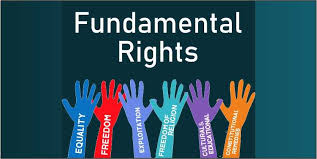
2. Fundamental Rights
Significance: Safeguard against arbitrary laws or government misuse of power.
Categories & Examples:
| Category |
Articles |
Key Idea |
Example |
| Equality |
14–18 |
No discrimination |
Equal opportunity in government jobs |
| Freedom |
19–22 |
Liberty, expression, assembly |
Express opinions on social media |
| Against Exploitation |
23–24 |
No forced/child labor |
Child labor banned under law |
| Religion |
25–28 |
Freedom to practice religion |
Choose your religion freely |
| Cultural & Educational |
29–30 |
Minority rights, preserve culture |
Minority language schools |
| Remedies |
32 |
Enforce FR in court |
File writ petition in SC/HC |

💡 Exam Tip: Link examples to real-life situations: social media posts, government jobs, child labor laws, or minority schools.
3. Fundamental Duties
Origin: Added by 42nd Amendment (1976) under influence of Directive Principles.
Significance: Balances rights with responsibilities; encourages respect for law and social harmony.
- Respect public property, protect rivers & forests
- Promote scientific temper and education
11 Fundamental Duties (Article 51A):
- Abide by the Constitution & respect its ideals
- Respect national flag & anthem
- Cherish ideals of freedom struggle
- Uphold sovereignty, unity, and integrity
- Defend the country & render national service
- Promote harmony & brotherhood
- Preserve rich heritage & culture
- Protect & improve natural environment
- Develop scientific temper & humanism
- Safeguard public property & abjure violence
- Strive for excellence & provide education to children

4. Directive Principles of State Policy (DPSP)
Historical Context: Inspired by Irish Constitution; aims to build a just society.
- Social: Free & compulsory education (Article 45), public health
- Economic: Equal pay for equal work, fair wages
- Political: Organize village panchayats, decentralize governance
Significance: Helps government create laws for welfare, poverty reduction, and social justice. Non-justiciable but courts encourage harmonization with FR.
5. India as a Welfare State
Definition: A state ensuring economic, social, and political well-being of citizens.
- Reduces poverty and inequality
- Provides education, health, employment security
- Combines democracy with social justice
Examples: Mid-day meal scheme, PDS, Rural employment programs.
5. Cultural and Educational Rights (Articles 29–30)
What it means: Protects minorities’ rights to preserve their culture, language, and educational institutions.
- Minority language schools (Telugu, Urdu, Tamil-medium schools) can operate and preserve their culture.
- Right to conserve heritage, language, and culture of a community.
Significance: Promotes diversity, equality, and cultural preservation in a multi-lingual, multi-religious country like India.

6. Right to Constitutional Remedies (Article 32)
What it means: Citizens can approach Supreme Court or High Court if Fundamental Rights are violated.
- Filing a writ petition if freedom of speech is restricted unfairly.
- Seeking enforcement of rights like equality, education, or protection from exploitation.
Significance: Known as the “heart and soul of the Constitution” (Dr. B.R. Ambedkar). Ensures Fundamental Rights are enforceable.

Quick Summary Table: Fundamental Rights
| FR Category |
Articles |
Key Idea |
Example |
| Equality |
14–18 |
No discrimination |
Equal opportunity in government jobs |
| Freedom |
19–22 |
Liberty, expression, assembly |
Express opinions on social media |
| Against Exploitation |
23–24 |
No forced labor/child labor |
Child labor banned under law |
| Religion |
25–28 |
Freedom to practice religion |
Choose your religion freely |
| Cultural & Educational |
29–30 |
Minority rights, preserve culture |
Minority language schools |
| Remedies |
32 |
Enforce FR in court |
File writ petition in SC/HC |
💡 Exam Tip: Link examples to real-life situations: social media posts, government jobs, child labor laws, or minority schools.
3. Fundamental Duties (Article 51A)
Origin: Added by 42nd Amendment (1976) under the influence of Directive Principles.
Significance: Balances rights with responsibilities; encourages respect for law and social harmony.
- Respecting public property during protests
- Protecting rivers and forests
- Promoting scientific temper (encouraging education, research)
11 Fundamental Duties:
- To abide by the Constitution and respect its ideals and institutions
- Respect the Constitution, national flag, and national anthem
- To cherish and follow the noble ideals that inspired the freedom struggle
- To uphold and protect the sovereignty, unity, and integrity of India
- To defend the country and render national service when required
- To promote harmony and the spirit of common brotherhood
- To preserve the rich heritage of our composite culture
- To protect and improve the natural environment
- To develop scientific temper, humanism, and spirit of inquiry and reform
- To safeguard public property and abjure violence
- To strive towards excellence in all spheres of individual and collective activity; provide education to children
