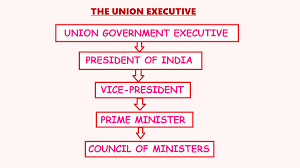
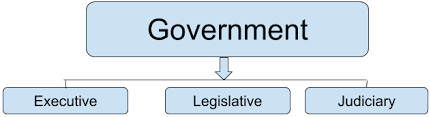
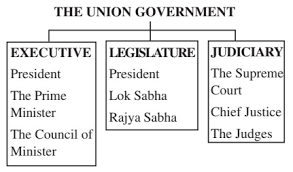
🔹 1. The President (Nominal Executive)
- Head of the State
- Elected indirectly by Electoral College (MPs + MLAs)
- Acts on advice of Prime Minister and Council of Ministers
- All executive actions are done in his/her name
Powers of the President:
- Executive: Appoints PM, ministers, governors, judges
- Legislative: Summons Parliament, gives assent to bills
- Financial: Budget presented in his name
- Judicial: Can grant pardon
- Emergency: Can declare National, State, Financial Emergency
🔹 2. The Vice-President
- Second highest constitutional office
- Elected by both Houses of Parliament
- Chairman of the Rajya Sabha
- Acts as President when needed
🔹 3. The Prime Minister (Real Executive)
- Real head of the government
- Leader of majority party in Lok Sabha
- Appointed by the President
Functions:
- Forms Council of Ministers
- Allocates portfolios
- Advises the President
- Coordinates government policies
🔹 4. Council of Ministers
- Headed by Prime Minister
- Includes Cabinet Ministers, Ministers of State, Deputy Ministers
Key Features:
- Collective Responsibility to Lok Sabha
- Remains in power with majority support
🔹 Key Concepts
- Nominal Executive: President
- Real Executive: Prime Minister & Council of Ministers
- Parliamentary System: Executive responsible to Legislature
🔹 Parliamentary Form of Government
- India follows a parliamentary system similar to United Kingdom
- Executive is accountable to Lok Sabha
- Real power lies with elected representatives
🔹 Tenure of the President
- Term is 5 years
- Eligible for re-election
- Can resign or be removed by Impeachment
- Continues until successor takes charge
🔹 Impeachment of the President
- Removal for violation of Constitution
- Initiated in either House of Parliament
- Requires special majority
🔹 Discretionary Powers of the President
- Appoints Prime Minister when no clear majority
- Can return a bill for reconsideration
- Can use Pocket Veto
🔹 Ordinance Making Power
- Can issue ordinances when Parliament is not in session
- Has the same force as law
- Must be approved within 6 weeks
🔹 Role of Cabinet
- Most powerful group of ministers
- Takes major policy decisions
- Handles key ministries like Defence, Finance, Home Affairs
🔹 Individual Responsibility
- Each minister is responsible for their department
- Answers questions in Parliament
🔹 Attorney General of India
- Highest legal advisor to the Government
- Appointed by the President
- Can speak in Parliament (no voting rights)
🔹 Cabinet Secrecy
- Ministers take an oath of secrecy
- Cabinet discussions are confidential
🔹 Vote of No Confidence
- Lok Sabha can remove the Council of Ministers
- If passed, the entire ministry resigns
🔹 Coalition Government
- Formed when no party gets majority
- Multiple parties form government
- Prime Minister manages alliances
🔹 Appointment of Prime Minister
- Appointed by the President
- Usually the leader of the majority party in Lok Sabha
- In case of no majority, President may use discretion
🔹 Appointment of Council of Ministers
- Appointed by the President on advice of Prime Minister
- Must be members of Parliament (or become within 6 months)
- Hold office during the pleasure of the President
🔹 Oath of Office
- Administered by the President
- Includes oath of office and secrecy
- Ensures commitment to Constitution
🔹 Resignation of Ministers
- Ministers resign if they lose confidence of Lok Sabha
- Prime Minister can ask any minister to resign
- If PM resigns, entire Council resigns
🔹 Cabinet Meetings
- Chaired by the Prime Minister
- Important decisions are taken collectively
- Ensures coordination among ministries
🔹 Role of Prime Minister in Parliament
- Leader of the Lok Sabha (if member)
- Announces major policies and decisions
- Represents government in debates
🔹 Relationship between President and Prime Minister
- President acts on advice of Prime Minister
- PM communicates all decisions to President
- Ensures smooth functioning of government
🔹 Emergency Executive Power
- During emergency, President gets wider powers
- Central government gains control over states
- Fundamental Rights may be restricted
🔹 Checks on Executive
- Judiciary can declare actions unconstitutional
- Parliament can question and control executive
- Media and public opinion act as watchdogs
🔹 Importance of Executive
- Implements laws effectively
- Maintains law and order
- Runs day-to-day administration
- Ensures development and welfare programs
🔹 Quick Revision Points
- President = Nominal Head
- Prime Minister = Real Head
- Council of Ministers = Policy Makers
- Lok Sabha controls Executive
🔹 Council of Ministers vs Cabinet
- Council of Ministers includes all categories of ministers
- Cabinet is a smaller, powerful group within it
- Cabinet takes major policy decisions
🔹 Categories of Ministers
- Cabinet Ministers: Handle important ministries
- Ministers of State: Assist Cabinet Ministers
- Deputy Ministers: Assist in administrative work
🔹 Collective Responsibility
- All ministers are jointly responsible to Lok Sabha
- Decisions are taken collectively
- If one fails, entire Council is responsible
🔹 Role of Lok Sabha
- Controls the Executive
- Can pass No-Confidence Motion
- Ministers must answer questions
🔹 Powers of Prime Minister
- Selects and removes ministers
- Leads the Cabinet
- Advises President on key decisions
- Represents India internationally
🔹 Role in Policy Making
- Executive formulates government policies
- Policies are implemented through ministries
- Ensures national development
🔹 Administration of Laws
- Ensures laws passed by Parliament are enforced
- Maintains law and order in the country
- Works through civil services
🔹 Role of Civil Servants
- Assist ministers in administration
- Provide expert advice
- Ensure smooth functioning of government
🔹 Importance of Majority Support
- Government must have majority in Lok Sabha
- Losing majority leads to resignation
- Ensures democratic accountability
🔹 Stability vs Accountability
- Executive provides stability to government
- Lok Sabha ensures accountability
- Balance is essential in democracy
🔹 Role during Crisis Situations
- Takes quick decisions during emergencies
- Ensures national security
- Coordinates relief and administration
🔹 Democratic Nature of Executive
- Executive is formed from elected representatives
- Accountable to people through Parliament
- Ensures public participation in governance